Buffalo for Biodiversity
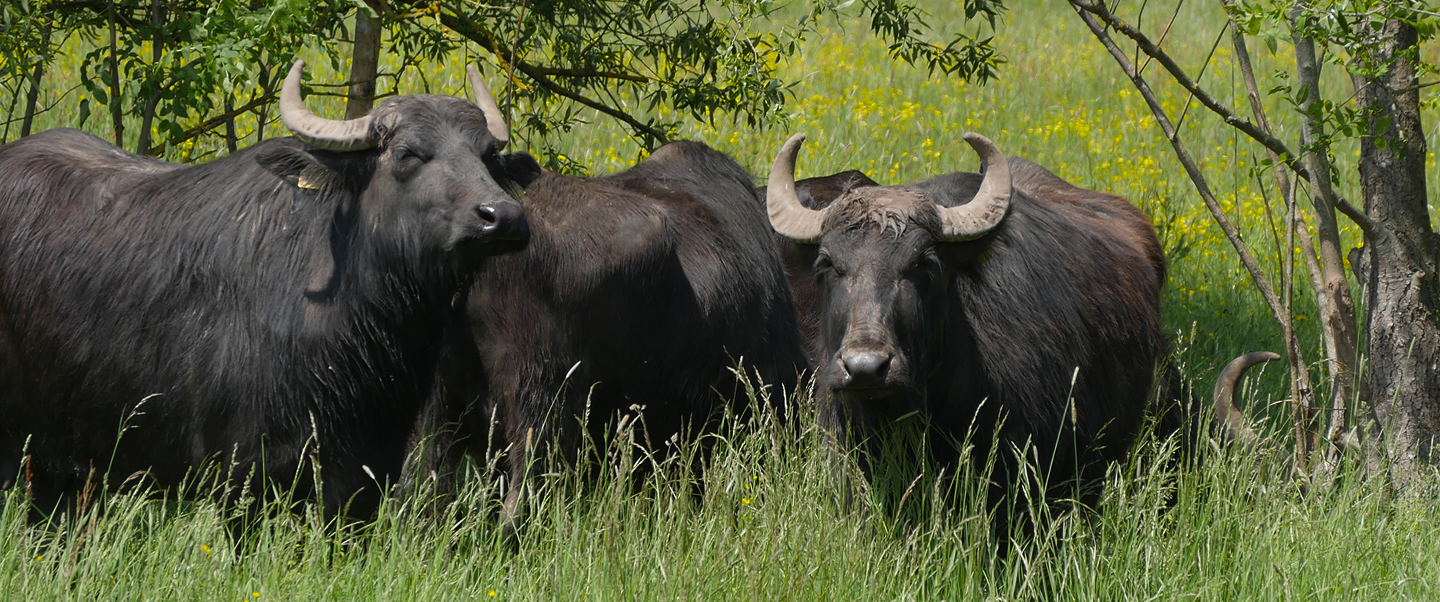
Water buffalo in the Bottwartal are not just for show – they are landscape caretakers. They reopen the floodplain, create trampling and wallowing spots, and thus provide space for species that seemed lost.
Buffalo for Biodiversity
Water buffalo in the Bottwartal are not just for show – they are landscape caretakers. They reopen the floodplain, create trampling and wallowing spots, and thus provide space for species that seemed lost.
Areas in Ecological Standstill
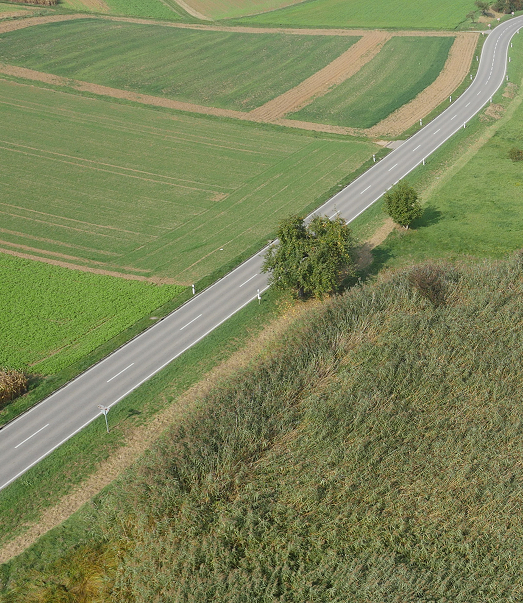
The Bottwar floodplain had lost its natural dynamics due to overgrowth, drainage, and usage pressure. Monotonous, structurally poor areas hardly offered any habitat for wetland inhabitants – still water zones, structurally rich open land, and small water bodies were almost completely missing. The floodplain was ecologically in standby mode and needed a strong impulse to become a vibrant habitat again.
Areas in Ecological Standstill
The Bottwar floodplain had lost its natural dynamics due to overgrowth, drainage, and usage pressure. Monotonous, structurally poor areas hardly offered any habitat for wetland inhabitants – still water zones, structurally rich open land, and small water bodies were almost completely missing. The floodplain was ecologically in standby mode and needed a strong impulse to become a vibrant habitat again.
This is what we changed in the Bottwartal:
12 hectares of land protected
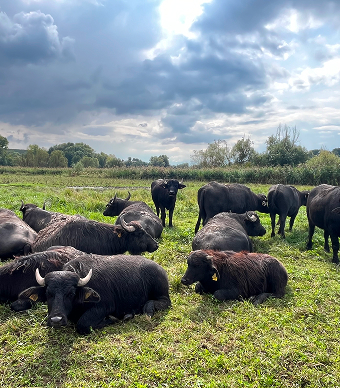
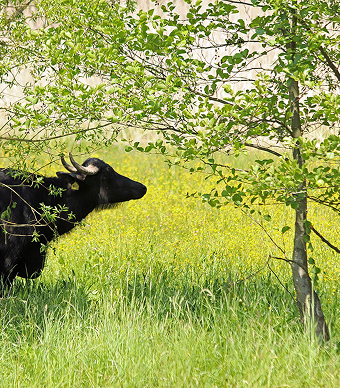
Herd of around 15 water buffalo introduced
-1-1765704652.jpg)
Created habitat for rare species
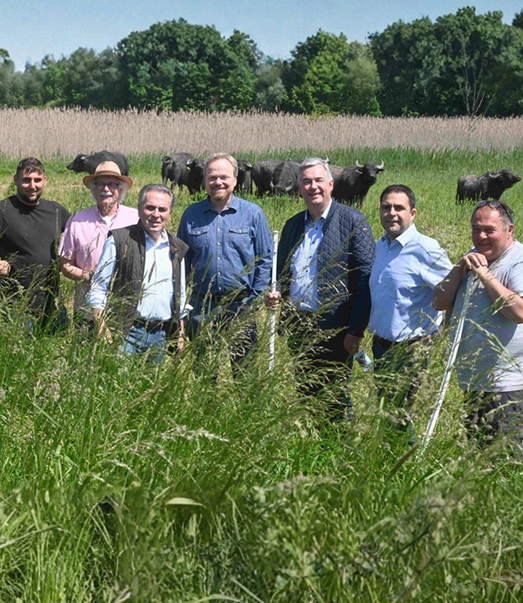
Since 2019, the water buffalo in the Bottwar floodplain have contributed to landscape diversity and climate protection. District Administrator Dietmar Allgaier (3rd from right) congratulated the buffalo managers Uli Weigle (1st from left), Gerhard Fahr (2nd from left), and Andreas Weigle (right), the initiator Claus-Peter Hutter (3rd from left), as well as the supporters Mayor Ralf Immermann (2nd from right) and the director of the Stuttgart Natural History Museum Prof. Dr. Lars Krogmann (center) on the successful project.
Grazing as a Solution
In a cooperation between NatureLife-International, the Ludwigsburg district, local livestock farmers, and scientific partners, water buffalo were introduced for extensive grazing in the Bottwartal. With defined stocking densities, targeted rotational grazing, and a monitoring system, structural diversity and wet areas were purposefully restored. This created a vibrant mosaic of structurally rich open land as well as water and swamp zones, offering new opportunities for endangered species.
Since 2019, the water buffalo in the Bottwar floodplain have contributed to landscape diversity and climate protection. District Administrator Dietmar Allgaier (3rd from right) congratulated the buffalo managers Uli Weigle (1st from left), Gerhard Fahr (2nd from left), and Andreas Weigle (right), the initiator Claus-Peter Hutter (3rd from left), as well as the supporters Mayor Ralf Immermann (2nd from right) and the director of the Stuttgart Natural History Museum Prof. Dr. Lars Krogmann (center) on the successful project.
Grazing as a Solution
In a cooperation between NatureLife-International, the Ludwigsburg district, local livestock farmers, and scientific partners, water buffalo were introduced for extensive grazing in the Bottwartal. With defined stocking densities, targeted rotational grazing, and a monitoring system, structural diversity and wet areas were purposefully restored. This created a vibrant mosaic of structurally rich open land as well as water and swamp zones, offering new opportunities for endangered species.
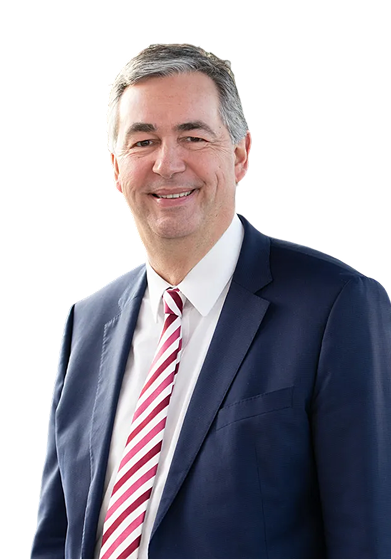
What has been achieved here, and continues to be achieved, by everyone involved and by an impressive network across many sectors of society deserves great recognition.
Dietmar Allgaier |
District Administrator, Ludwigsburg District